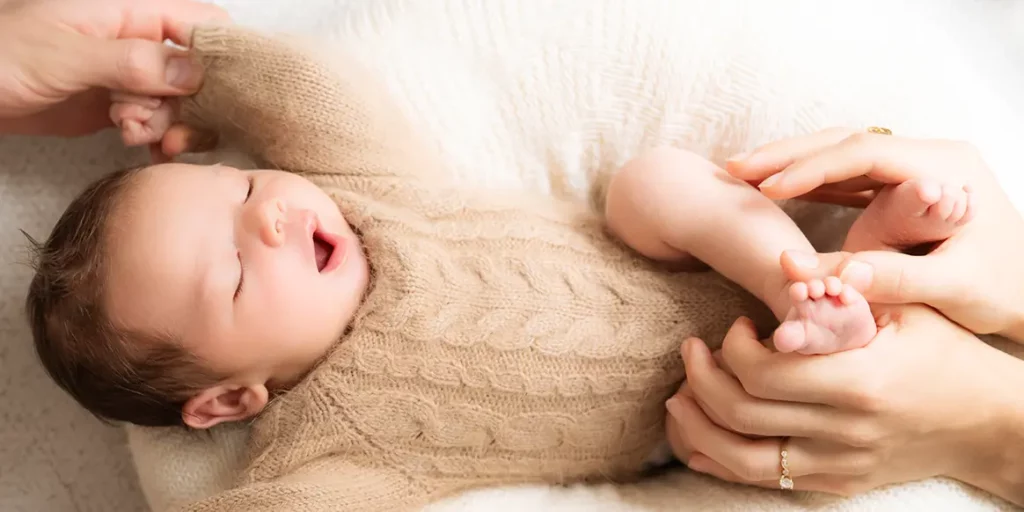
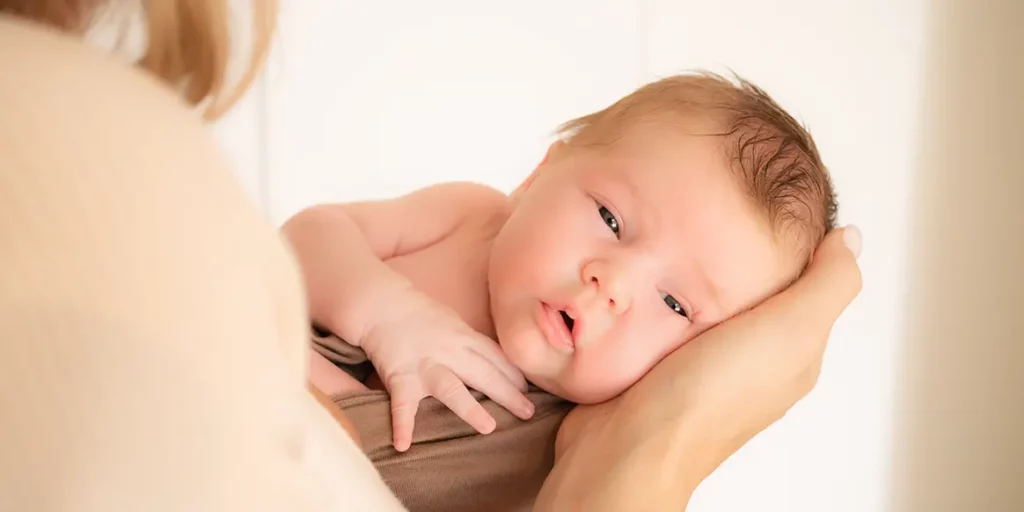
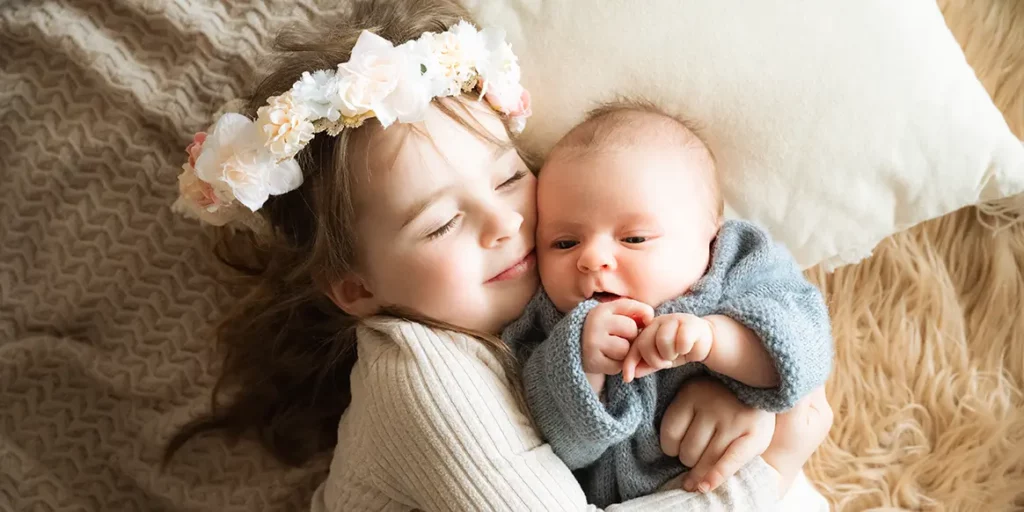
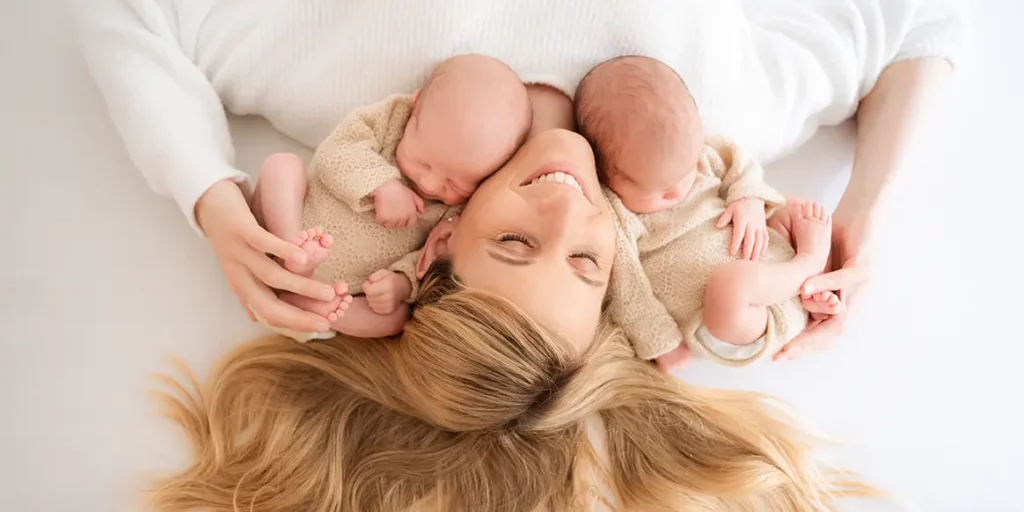
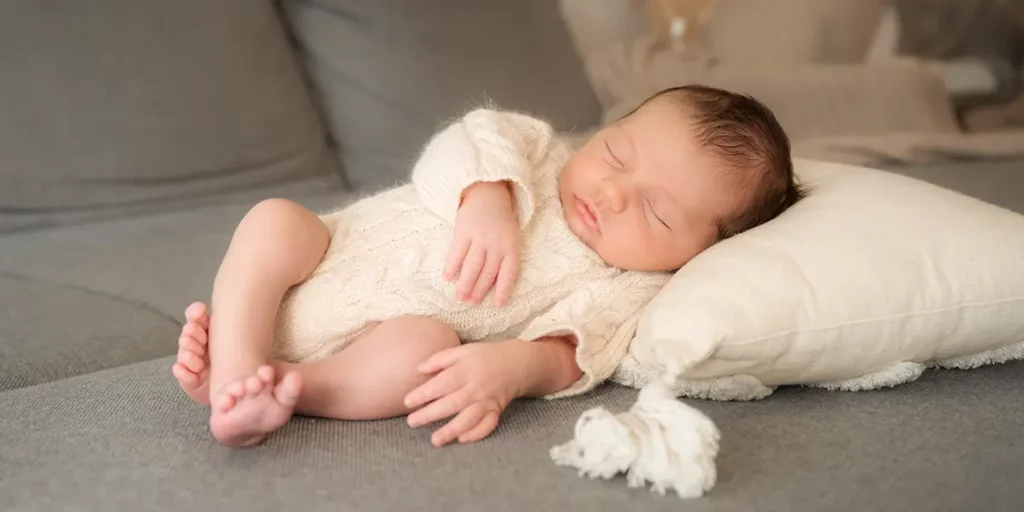
The first two weeks after the birth have passed, and we haven’t had a newborn photoshoot yet. Here are your options and the deadline for when the newborn style is still possible
A classic newborn photoshoot takes place within the first 14 days after birth. Even after this period has passed, newborn-style baby photos are still possible: Up until about the sixth week of life, many elements of newborn photography can still be captured, from gentle poses to swaddling blankets and baskets to delicate close-ups. From the sixth to the eighth week, the style shifts more toward a wakeful baby photo session.
Here you will find a brief summary of the main contents of the article:
- The typical time frame is between days 5 and 14. During this time, newborns sleep deeply and naturally assume these curled-up poses. To find out exactly why these days are considered ideal, read the article on the best time for a newborn photoshoot.
- Between the 3rd and 6th weeks of life, there are still plenty of possibilities. Gentle poses, swaddling blankets, baskets, and close-ups of those tiny feet and fingers are still possible. Only the deep-sleep poses require more patience and a little luck.
- From the 6th to the 8th week, we begin doing photoshoots with your baby awake. Your baby will smile intentionally, respond to your voices, and sleep less deeply. The focus shifts from quiet, sleeping shots to interaction and more active photos with eye contact.
- Your decision depends on your baby’s age. If your baby is less than 3 weeks old, book a newborn photoshoot. Between the 3rd and 6th week, a newborn-style photoshoot is ideal. If your baby is older, plan a photoshoot while your baby is awake and set aside plenty of time for it.


- In a nutshell: What's still possible after the first two weeks
- Why So Many Parents Miss the Window of Opportunity
- What Changes After the First Fourteen Days
- Is it still possible to book a newborn photo shoot with you?
- Newborn-style baby photos up to the sixth week
- At what point does a newborn photo shoot turn into a photo shoot with an awake baby?
- Which path is the best fit for you right now?
- Frequently Asked Questions After the Newborn Window Has Passed
- What I Can Offer You for a Baby Photo Shoot
- Tips and inspiration for your newborn and baby photo shoot
The two weeks after childbirth are the most intense time in the life of a new family. That’s why the photo shoot so often gets put off. In my practice, I hear three common reasons in particular:
- Everyday life with a newborn is incredibly demanding. Breastfeeding, changing diapers, sleeping—and then all over again. Add to that the short nights and adjusting to a completely new family situation. Many mothers tell me that during those weeks, they couldn’t think of anything else but their baby and getting a few hours of sleep. And that’s exactly how it should be.
- The birth didn’t go as planned. A C-section, a longer hospital stay, breastfeeding problems, a premature baby in the neonatal unit. Physical exhaustion or postpartum depression are also things you can’t plan for. If you could barely sit up during those first few days, a photo shoot simply wasn’t possible.
- The desire didn’t come until later. Some parents don’t give the topic a second thought during pregnancy. They see photos of their friends’ newborns and only then realize that they’d like to have something like that, too. Others had an appointment and postponed it—and then postponed it again.

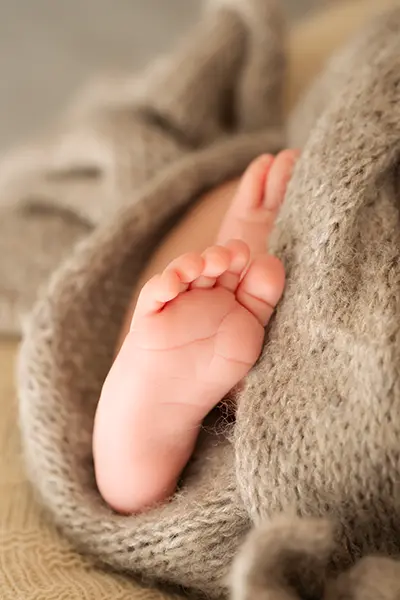

Starting in the third week of life, your baby will become noticeably more alert. The first growth spurt begins, deep sleep phases become shorter, and waking periods become longer. Your baby reacts to voices, lifts their head for a moment, and becomes more aware of their surroundings. For the photo shoot, this means fewer poses while sleeping and more genuine reactions.
Why Newborn Poses Are Less Common These Days
The typical newborn poses rely on the baby sleeping deeply and relaxing into a curled-up position. As the weeks go by, the muscles become more active, the little arms stretch out, and sleep becomes lighter. Poses in baskets and bowls are then harder to achieve and require significantly more patience.
You can’t force this, and I don’t even try. I’ll only pose your baby as much as your baby is comfortable with. Anything else would compromise safety during the newborn photoshoot and wouldn’t look good in the end.
What new options are now available
In my experience, older babies are no worse to photograph than newborns. But they behave differently. What is lost are mainly the posed sleeping shots. What is added is often even more moving: the first half-opened eyes, an attentive look directly into the camera, the small frown when listening to your voice or the tiny fists that open briefly.
For a baby photo shoot, this means, above all, more flexibility, more patience, and a different approach. Instead of positioning the baby in specific poses, we follow the baby and capture the moments and situations that arise.
Timing also becomes more important because your baby has longer periods of wakefulness. I’ve described how to prepare for the session and what time of day works best in the guide to preparing for your newborn photoshoot and in the post about the best time for a newborn photoshoot. For young babies, I especially love coming to your home because that’s where they’re most relaxed. You can read about how a home session works at your place in a separate post.
One of my favorite customer testimonials comes from a family who came to me with a seven-week-old baby because they had missed the ideal time window. Franziska wrote to me at the time, saying the photos had turned out absolutely adorable, and that her little one had felt right at home during the baby photo shoot. That’s exactly what I experience time and time again. However, it does take a little more luck now to pull off the poses you’ve envisioned.

There’s a window of time between the 3rd and 6th weeks of life that many parents aren’t aware of. Your baby is no longer a typical newborn, but isn’t quite an active baby yet either. It’s right in between, and from a photographic standpoint, this is one of the most beautiful phases.
Which newborn items can still be made now
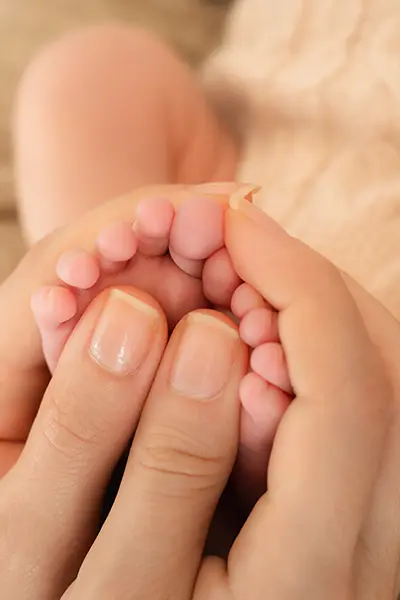
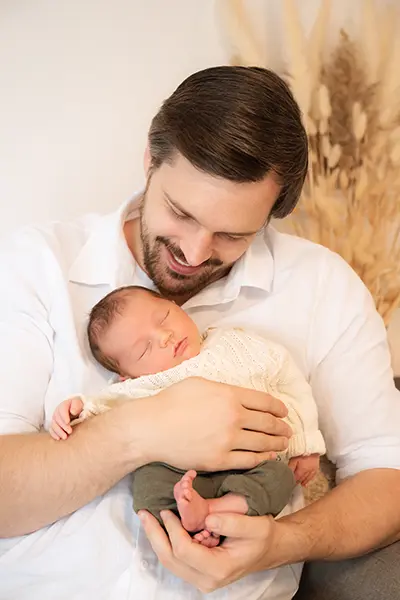
During this time, many elements of classic newborn photography can still be captured: gentle poses on a soft surface, delicate swaddling cloths and blankets, or photos in a basket with other newborn accessories. Close-up shots—which many parents love—are also possible: the tiny soles of the feet, the delicate fingers, and the soft hair at the back of the head. The baby is still small enough for these photos, and many of these shots look almost identical to those taken of a two-week-old newborn.
The difference lies in how I, as a photographer, work with you, the parents. We’re more flexible, more patient, and have a different perspective on when a quiet moment arises and how we can make the most of it.
How We Work Together During This Phase
What I especially appreciate about photo shoots during the third through sixth weeks is that your baby is often already able to make their first conscious eye contact during this time. Sometimes they look at you as if they already recognize you. They react to your voices, turn their head toward you, and might even make their first attempts at smiling while half-asleep. These moments of wakefulness complement the peaceful sleeping poses.
On top of that, after a few weeks, you’ll already know your baby much better and have recovered from the rigors of childbirth. You’ll know when your child is tired, when they’re content, and how best to soothe them. You’ll be more relaxed going into the baby photo shoot, and that calmness will show in the pictures.
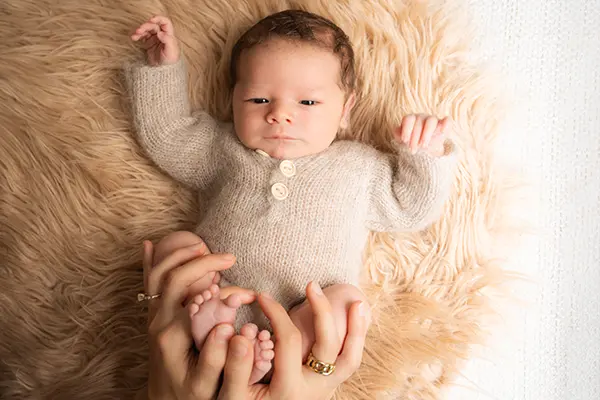

The transition occurs around the 6th to 8th week of life. From this point on, at the latest, traditional newborn photography takes a back seat, and baby photography takes center stage.
Long, deep sleep periods become less frequent, and it’s getting harder and harder to associate bassinets and swaddling blankets with a sleeping baby. Instead, your baby gives you their first conscious smile in response to your face and voice. Your baby follows movements with their eyes and shows facial expressions. The focus shifts from quiet time to interaction.
I described which photos are taken in which month in my post about baby photo shoots during the first year of life.
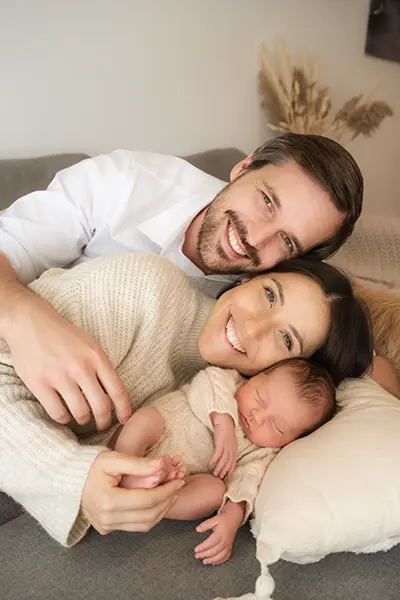
My recommendation depends mainly on this question: How old is your baby now?
Your baby is not yet 3 weeks old. Then get in touch right away. In the first few days after the typical window, a newborn photoshoot can often still be arranged if there’s an available slot. Every day counts here.
Your baby is between 3 and 6 weeks old. If so, a newborn-style photo shoot is the perfect choice for you. Gentle poses, wraps, and baskets are still an option, and your baby’s first alert, wide-eyed looks are starting to show. This window of opportunity closes quickly, so don’t wait too long.
Your baby is older. So don’t wait for a window of opportunity that’s already passed—instead, make the most of what’s available right now. An alert baby who makes eye contact and shares their first smiles will result in lively photos that you’ll cherish just as much. Many families deliberately schedule their baby photo sessions around the 3-month mark because that’s when smiles are guaranteed.