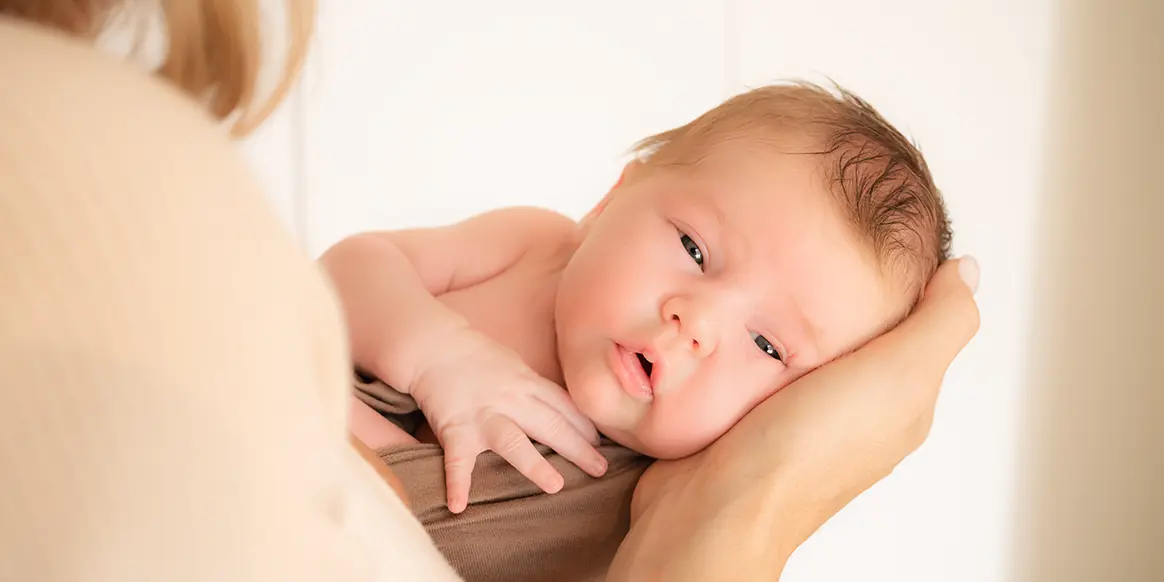

To ensure that your newborn photoshoot goes smoothly and safely, I’ll share some tips in this post on safety considerations for a newborn photoshoot
In this post, I’d like to raise awareness about safety in newborn photography and give you some tips for a smooth and safe session. In this article, you’ll learn how you can help ensure that your photo shoot not only produces beautiful pictures but is also completely safe for your baby.
Here you will find a brief summary of the main contents of the article:
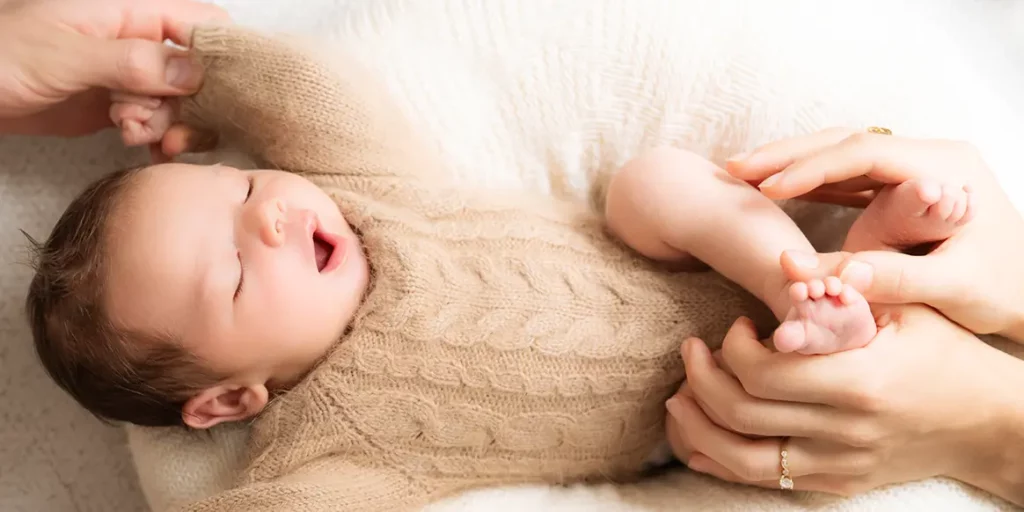
- A newborn is supported in every position, even between shots. The head, neck, and spine need to be supported by a hand at all times.
- Safe newborn posing requires training . Parents can ask their photographer specifically where and when she learned how to work with newborns.
- Newborns lose body heat faster than adults. The room is heated before the newborn photoshoot and kept draft-free as long as the baby is undressed.
- A newborn’s immune system is still underdeveloped. Everything that comes into contact with the baby must be freshly washed or cleaned before use.
- If a pose feels unnatural, we won’t take a picture of it. We never force a pose. Breastfeeding, diaper changes, and breaks are all part of a newborn photo shoot and don’t disrupt the session.
- A Quick Summary: What You Need to Know About Your Baby's Safety
- Why are newborns particularly sensitive?
- Choosing a Suitable Newborn Photographer
- Creating a Safe Environment for a Newborn Photoshoot
- When selecting poses for newborns, do not compromise the newborn's safety
- Involve parents and encourage them to communicate with one another
- Prepare the siblings and support them during the shoot
- Ensure cleanliness and good hygiene conditions
- Take a look at my offer for newborn shootings
- Use my contributions for your newborn shoot
A newborn is still adapted to life in the womb, not to being held, positioned, and photographed. In the first few weeks, many of its protective mechanisms are still underdeveloped.
Head and neck. The neck muscles are still too weak to support the relatively heavy head. Whenever you lift a newborn, you’re always lifting its head as well. That’s why, in every pose, one hand remains on the head or neck.
Spine and joints. A newborn’s spine is curved, just as it was in the womb, and the joints are very flexible. A baby can be placed in positions that it would never assume on its own. That’s exactly why I only use positions that your baby can get into on its own.
The respiratory tract. The neck is short, and the cartilage is soft. If the chin drops too far toward the chest, it can make breathing difficult. Throughout the entire newborn photoshoot, I pay close attention to the distance between the chin and the sternum and adjust it as needed.
Heat balance. Relative to their weight, newborns have a large body surface area and little subcutaneous fat. They get cold even when we still find the temperature comfortable. A baby who is cold won’t fall asleep, and a baby who isn’t sleeping can’t be positioned properly.
Immune system. During the first few weeks of life, a baby is more susceptible to infections than later on. That’s why hygiene isn’t just a side issue during a newborn photoshoot —it’s a step in the process in its own right.
The most important question isn’t how beautiful the photos look, but whether the photographer is trained in newborn photography. Safe newborn posing is a skill. It’s something that’s learned, practiced, and regularly refreshed—just like any other aspect of working with very young children. Three questions will help you figure this out quickly:
- Where did you learn how to care for newborns? A professional photographer can identify it by name and year.
- How many newborns do you photograph each year? For a three-day-old baby, a routine isn’t a luxury—it’s a necessity.
- What do you do if my baby won’t cooperate with a pose? The correct answer is: then we won’t do it.
For more tips on what to look for when choosing a photographer, check out the post ” Finding Your Newborn Photographer.”
You don’t have to set up this environment. I usually take photos at families’ homes and bring everything your baby needs: soft surfaces, clean towels, and blankets. You don’t have to rearrange anything, buy anything, or put anything away. Here’s what matters:
- Warmth. Please make sure to heat the rooms properly before the photo shoot. Newborns are often photographed wrapped only in a blanket, and what feels comfortable to you will be too cold for your baby.
- Draft. Keep the windows and doors closed while your baby is out of the diaper. Air out the room during breaks.
- Storage space. The parents’ bed, the sofa, and the changing table all have edges. Your baby is never left alone there—not even for the two seconds it takes me to change the lens. Either you have one hand on the baby, or the baby is in your arms.
- Props. Baskets and bowls are lined and placed so that they cannot tip over. They stand on the floor, not on a raised surface.
- Light. I take photos using natural light and without a flash. This is more comfortable for your baby, and I don’t need to have tripods near him or her.
- Siblings and pets. Both are welcome. Both need someone to watch over them while I’m taking photos, so your baby is never left unattended. You can find out how this works with older children in the post “Newborn Photoshoot with Siblings,” and I’ve described the process for dogs in the post “Newborn Photoshoot with a Dog.”
To learn how a home photoshoot with newborn photos takes place and which room in your home is best suited for it, read the post “Newborn Photoshoot at Home.” You can find out what to have ready beforehand in the section “Preparing for Your Newborn Photoshoot.”


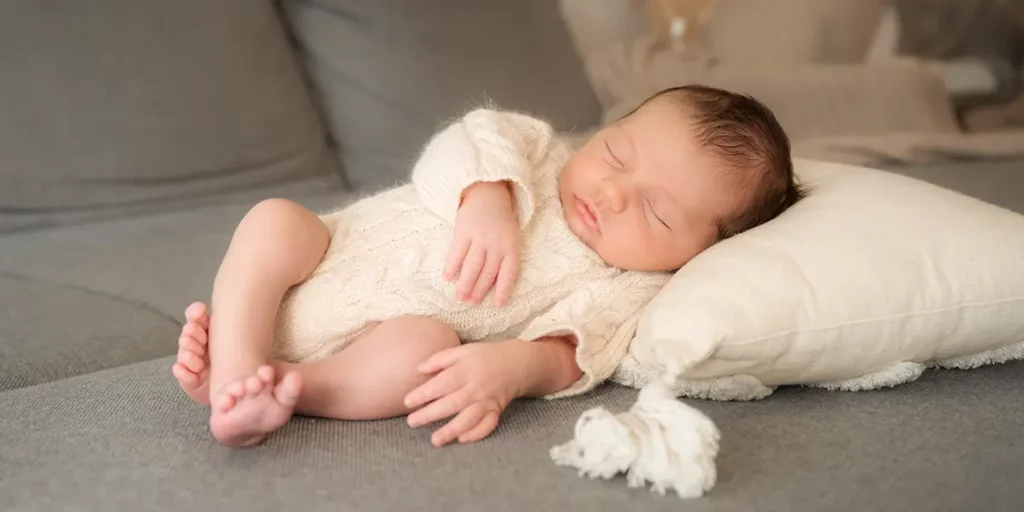
Most newborn poses are unspectacular to execute. They work because the baby naturally assumes the position and is supported throughout. This one rule applies to every pose and to the moments in between.
- Image editing makes it possible: Some of the most impressive newborn photos are the result of careful image editing. The photographer should know which poses are safe to use during the shoot and which ones should be created during post-processing.
- Rules for Holding and Supporting Your Baby: Each pose should be arranged so that the baby’s head, neck, and spine are supported. It’s best to avoid risky or unsafe poses.
- Pay attention to the baby’s cues: Be mindful of the baby’s cues and adjust the photo shoot if the newborn seems uncomfortable. Flexibility and patience are key here.
- Working with Parents: For more complex poses, parental involvement may be necessary.


A newborn photoshoot thrives on communication between the parents and the photographer, both before and during the session.
- Preliminary Consultation with the Parents: A consultation with the parents should take place before the newborn photoshoot. This is an opportunity to answer questions, discuss preferences, and address any concerns.
- Handling the Baby Gently: Every newborn should be treated with respect and care. The photographer should always act with sensitivity and prioritize the baby’s well-being.
- Involving Parents in the Photo Shoot: Parents should be actively involved, whether by helping with the poses or by giving them the opportunity to share their preferences.
- Provide transparent information and guidance: The photographer should explain the planned poses and procedures and provide guidance on safety measures. This helps build trust among everyone involved.
- Ongoing Communication During the Photo Shoot: There should be ongoing communication during the photo shoot so that adjustments can be made as needed. This ensures that the shoot is a positive experience for everyone.


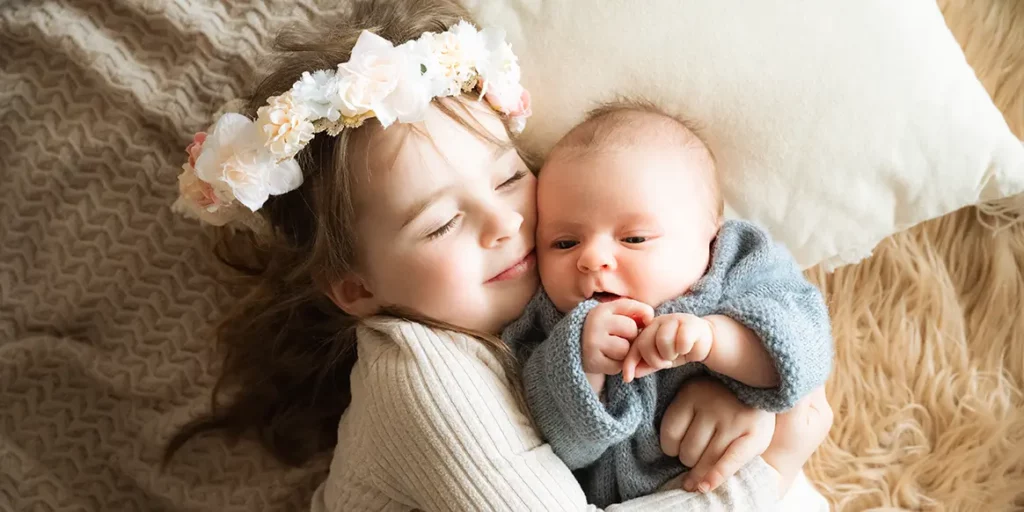
When siblings take part in a photo shoot, the results are often especially heartwarming. However, involving older children requires extra attention and care. Here are some tips and things to keep in mind for these types of photo shoots. For more information, check out my post “Newborn Photoshoot with Siblings.”
- Preparation and information: Siblings should be prepared for the photo shoot in advance and informed about how to handle the newborn baby with care. Clear communication helps to avoid accidents.
- Assistance with Poses: For poses in which siblings are holding or touching the baby, an adult should always be nearby. The photographer or a parent should be ready to step in if necessary.
- Patience and flexibility: Children can behave unpredictably. It is important to be patient and flexible to the needs and moods of siblings in order to maintain a relaxed atmosphere.
- Fun and Playful Elements: To involve siblings in the newborn photoshoot and keep them happy, playful elements and small rewards can be helpful. This encourages cooperation and creates positive memories.
- Separate breaks for siblings: Depending on the age and patience of the siblings, it may make sense to give them their own breaks and only include them for certain photos.


Your newborn’s health is the top priority, so good hygiene practices should go without saying. Whether at the studio or at your home, a clean environment protects your baby from infections and ensures a relaxed newborn photo shoot.
- Cleaning the Space and Equipment: The studio, backdrops, accessories, and props should be thoroughly cleaned and disinfected before and after every photo shoot. For a home photo shoot, you’ll be working in your familiar surroundings.
- Hand hygiene for everyone: Regular hand washing is essential. This applies not only to the photographer, but also to the parents and all other people present.
- Use of Disposable Items: Whenever possible, disposable items such as wipes or pads should be used. If this is not possible, all reusable items should be cleaned after each use.
- Good air quality: Good air quality and regular ventilation of the photo studio can help prevent the spread of germs.
- Health check before the photo shoot: Both the photographer and the parents should act responsibly if anyone shows symptoms of illness and postpone the photo shoot if necessary.