
You don’t need a list of poses to work through during your family photo shoot. The best ideas for family photos come from whatever you come up with on the spot and whatever arises from the situation.
You have a family photo shoot in mind and are wondering what you should actually plan for it. Maybe you’ve already gathered some ideas, or maybe you just have a feeling that you don’t want the photos to look stiff this time. Either way is a good starting point.
Here, I’ll show you which ideas really work during the photo shoot: by mood, by activity, by composition. You don’t need to memorize any of this. It’s enough if, by the end, you have a general idea of what suits you.
Here you will find a brief summary of the main content of the article:
- A good idea isn’t a staged photo, but a moment when something genuine is happening. Instead of working through a list of poses, choose a situation where your family is already being themselves.
- The mood of the photos is the first decision to make, because it sets the tone for everything else. Four moods cover almost every preference: playful and lively, calm and emotional, documentary-style shots of your everyday life, or timelessly classic for display on the wall. In most photo shoots, we combine two of these.
- Activities are more effective than poses because they elicit a genuine response. The most effective ones include physical closeness—such as cuddling, carrying, and hugging—physical activity—such as romping around, tossing a child in the air, and running—and shared activities—such as reading aloud, baking, or having a picnic.
- Plan for several different groupings, not just the group photo. The children on their own, each parent alone with the children, the two of you as a couple, and the grandparents included: A photo shoot can accommodate four to six different groupings.
- One or two personal props are enough for the entire photo shoot. Your favorite stuffed animal, a blanket, or a musical instrument say something about you. Elaborate decorations, on the other hand, distract from you.
- Three ideas are enough—I’ll take care of the rest. You don’t need to know how to do anything in front of the camera or prepare anything, because I’ll give you instructions during the shoot.
- In a nutshell: The best ideas come from within the family
- What kind of mood do you want your family photos to have?
- What do we do in front of the camera?
- What ideas for constellations can you see in the pictures?
- Posen and Perspectives for Natural Family Portraits
- Requirements and personal details in your family photos
- More tips and ideas for your family photo shoot
- Frequently Asked Questions About Ideas for Family Photos
- Take a look at my family photography offer
- Find more posts on family photography here
The mood of the photos is the first and most important decision, because it sets the tone for everything that follows. Four moods cover almost every need: playful, calm and emotional, documentary, or timelessly classic. In most family photo shoots, we combine two of them.
Playful and lively: Images full of movement
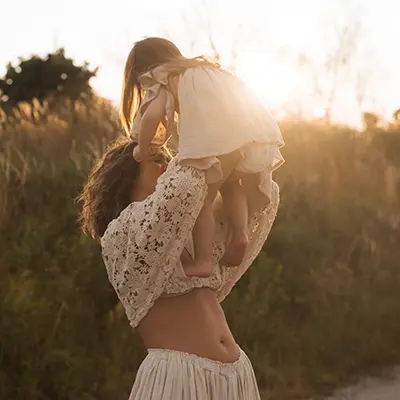
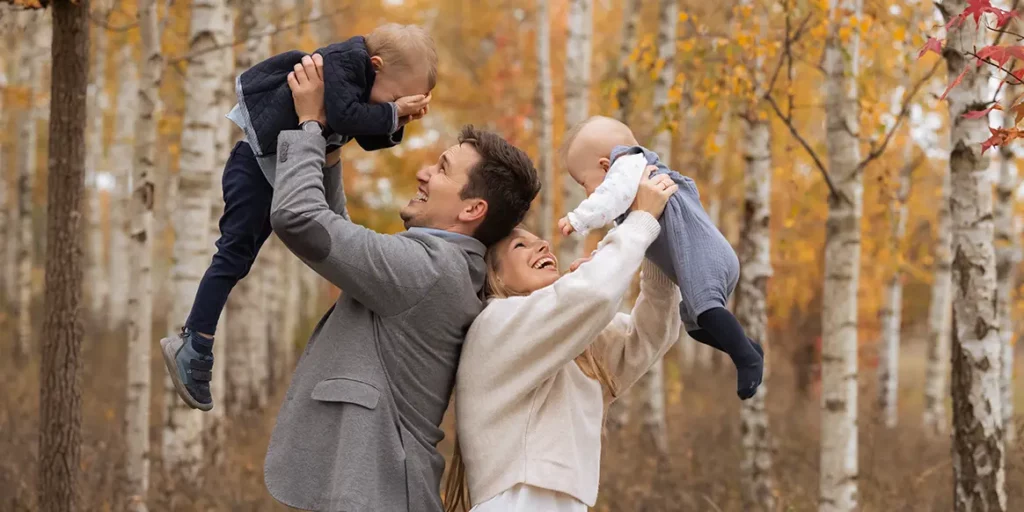
Here, it’s okay to be loud. Kids are tossed into the air, someone gets tickled, everyone runs down a hill and arrives at the bottom laughing. This atmosphere is perfect for families with young children because it embraces exactly what’s happening anyway, rather than fighting against it.
The side effect is the real reward: After ten minutes of running around, no one is putting on their “camera face” anymore. I usually take photos from a bit of a distance and with a longer focal length so that you can stay in the moment and forget about me.
Calm and Emotional: Intimacy, Glances, and Quiet Moments
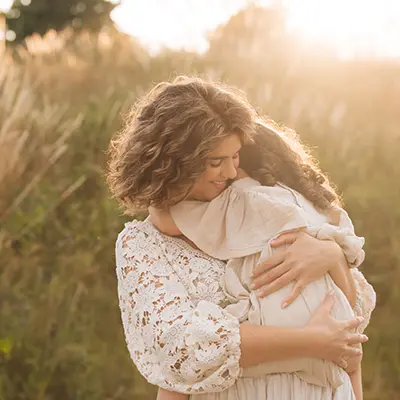
The other side of the coin. Little movement, a lot of closeness: forehead to forehead, a child in one’s arms, eyes closed, a kiss on the head. These images often have the greatest impact years later because they show a relationship.
Calm moments take a little time to build up. That’s why we rarely start with them; instead, we save them for the middle of the shoot, once you’ve arrived and the kids have gotten to know me.
Documentary-style: Your everyday life, just as it really is
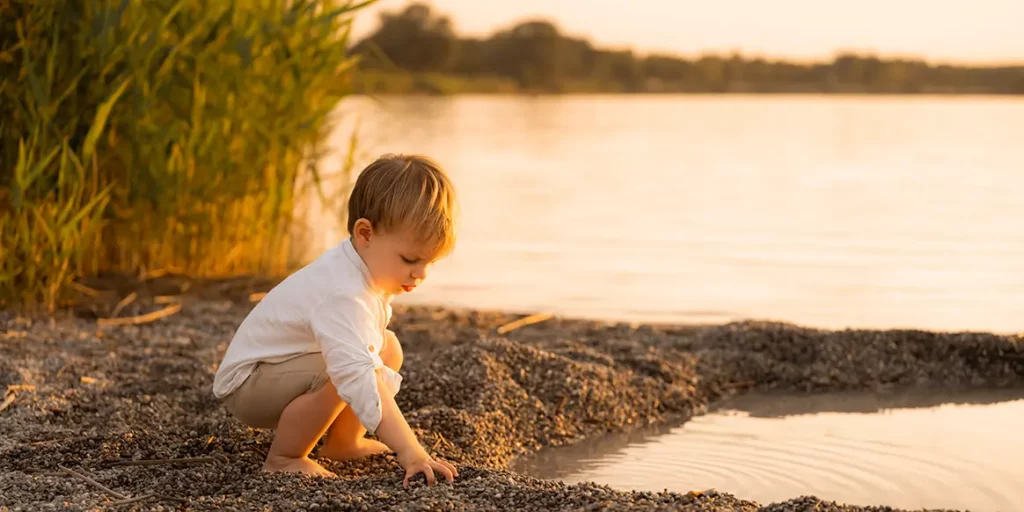
My favorite way to connect. We don’t make up a situation—we take a real one: Sunday breakfast, reading aloud on the sofa, getting dressed in the hallway with three pairs of shoes and a lost hat. You do what you always do, and I’m right there with you.
Candid family photos are the only ones that capture the chaos. That’s exactly why you recognize yourselves in them. And that’s exactly why, ten years from now, they’ll tell a more complete story than any staged photo.
Timeless and classic: Pictures for the wall and for the grandparents
There’s this one photo you need: everyone together, everyone looking at the camera, everyone in the picture. The grandparents want it, and you want to hang it on the wall. This photo is a family portrait with a special purpose.
I make a point of scheduling it—usually right at the beginning, while everyone’s hair is still in place and everyone’s patience is still fresh. After that, we clean up, and you’ll have your minds clear for the rest of the day.
I’ll give you small tasks that trigger a reaction, and I’ll photograph what happens next. Three types of activity work best for this: closeness, movement, and doing things together. If you choose one idea from each group for your family photo shoot, that’s more than enough.
Showing affection: cuddling, holding, hugging, and sitting on someone’s lap
Closeness is the easiest thing to achieve because it requires no effort. I ask you to move closer together than feels right for a photo. That’s exactly where the image begins to take effect.
What works well: holding the youngest child in your arms, one child on Dad’s shoulders, a hug from behind, everyone piled on top of each other on a blanket.
Getting active: playing rough, tossing things in the air, tickling, running, and dancing
Movement is my most important tool for breaking the ice. When people are running, jumping, or being tickled, they can’t strike a pose at the same time. That’s why I almost always start here with families who are nervous.
Tried-and-true ideas: running toward me together, rocking the child between you, having a pillow fight, jumping in a puddle, dancing in the living room. I use tickling sparingly because it can quickly turn into real excitement, but those two seconds right before that are often the best of the whole shoot.
Doing things together: reading aloud, baking, playing, blowing bubbles, and having a picnic
A shared activity gives everyone something to do, which eliminates the question of what to do with their hands. Reading aloud is a classic: Everyone is close together, looking in the same direction, and the atmosphere becomes calm.
Other ideas that work well in a photo shoot: kneading dough together, playing a board game, blowing bubbles for the little ones, having a picnic with real food, or playing a musical instrument together. The important thing is that it’s something you actually do. A made-up activity is easy to spot in a photo.
And then there’s the part for which there are no instructions: the moments in between. When a child suddenly hugs his sister, or someone laughs at something only your family understands. You can’t plan these moments, but you can make room for them.


Some families think only of the group photo when planning a family photo shoot and are surprised afterward to find that the most personal shots are the others. So be sure to plan for several different groupings: the children on their own, each parent alone with the children, the two of you as a couple, and the grandparents included. Four to six different groupings are easily achievable in a single photo shoot.
You, as parents, with your first child
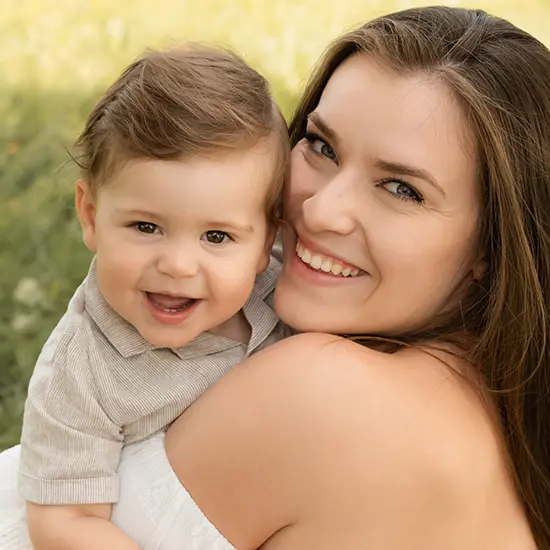
If there are three of you, the scene is still uncluttered, and that’s exactly what you can take advantage of. The child in the middle, held between you, lying on your legs, with both of you looking at him or her.
Don’t forget about yourselves. A few photos of just the two of you as a couple are a must—after all, you were there first. That’s the part many parents cherish the most in hindsight.
Siblings Among Themselves
Photos of siblings are the most honest family photos there are. They capture both closeness and rivalry in the same series, and both are part of the picture. I usually just let siblings play together instead of posing them side by side.
Ideas that work well: the older child carries the younger one, forehead to forehead, together under a blanket, a whispered secret, a race. When there’s a larger age gap, I give the older child a small responsibility, and then they visibly grow into the role.
Mommy Time and Daddy Time: Individual Photos with the Kids
Set aside a separate time slot with the children for each parent. These photos are completely different from the group shots because the dynamic between a child and a parent is different from that of the whole family.
For you as a mother, this is often the moment when you actually appear in the photos for the first time. Many mothers take photos for years without ever being in any of them. That can change in just a quarter of an hour.
Several Generations: Family Photos with the Grandparents
Multigenerational photos are the reason many families book a photo shoot in the first place, and they’re often the kind of occasion that can’t be put off. If the grandparents can be there, she’s happy to schedule it right away.
What has worked well: the classic group photo with everyone together first, then the grandparents alone with the grandchildren, followed by generational photos such as grandmother, mother, and daughter. For older family members, I plan for more breaks and shorter distances.
For me, poses aren’t set instructions—they’re starting points. I’ll arrange you in a formation, give you a small task to do, and photograph whatever unfolds from there. You don’t have to memorize any poses or reenact anything. These basic setups work for almost any family photo shoot:
- The circle: You stand close together, heads bowed, arms wrapped around one another. When photographed from above, it becomes a picture in which absolutely everyone can be seen.
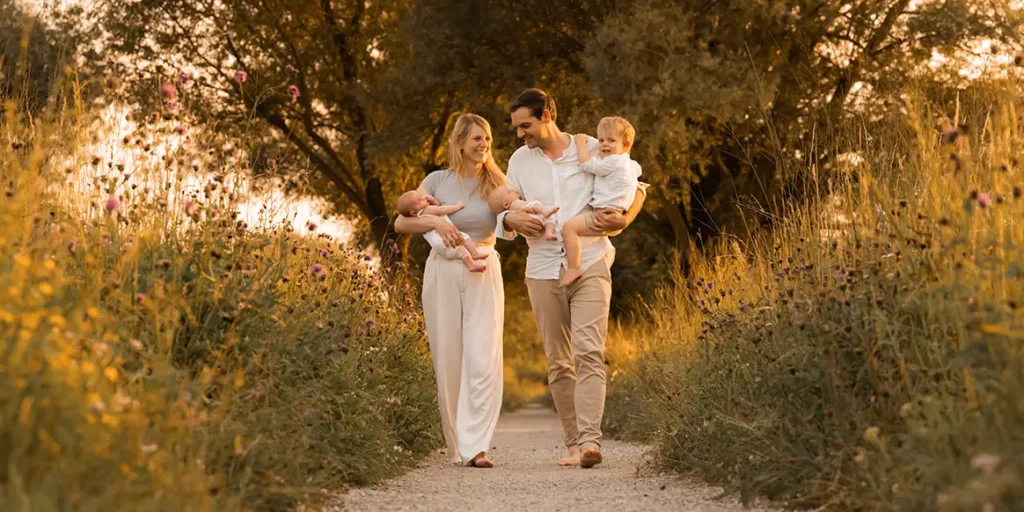
- The “In Motion” series: You’re walking toward me hand in hand, talking to each other, and not looking at the camera. It’s a classic shot that never looks stiff.
- Sitting and huddled together: on a blanket, a sofa, or a staircase. People who are sitting are relaxing, and differences in height make the group more interesting.
- Back-to-back or photographed from behind: For families who feel uncomfortable when everyone’s faces are visible.
- Looking directly at the camera: For a moment, everyone is looking at me. That’s the picture for the wall, and it’s fine if it’s a still shot.
The change in perspective is worth it. From above, you become part of the group; from below, the children look big and self-assured. Up close, I photograph the details: a small hand in a large one, smudged cheeks, the wrinkles on a grandmother’s hand.


Props are great when they’re meaningful to you, but they can be distracting if they’re just there to look pretty. An object with a story behind it gives children something to hold, helps put everyone at ease, and tells a little bit about you along the way. One or two items are enough for the entire photo shoot. Here’s what’s worked well:
- The child’s favorite thing: the well-loved teddy bear, the cozy blanket, the book that is read aloud every night.
- Something from your everyday life: a bicycle, a musical instrument, a handcart, a guitar that’s actually played.
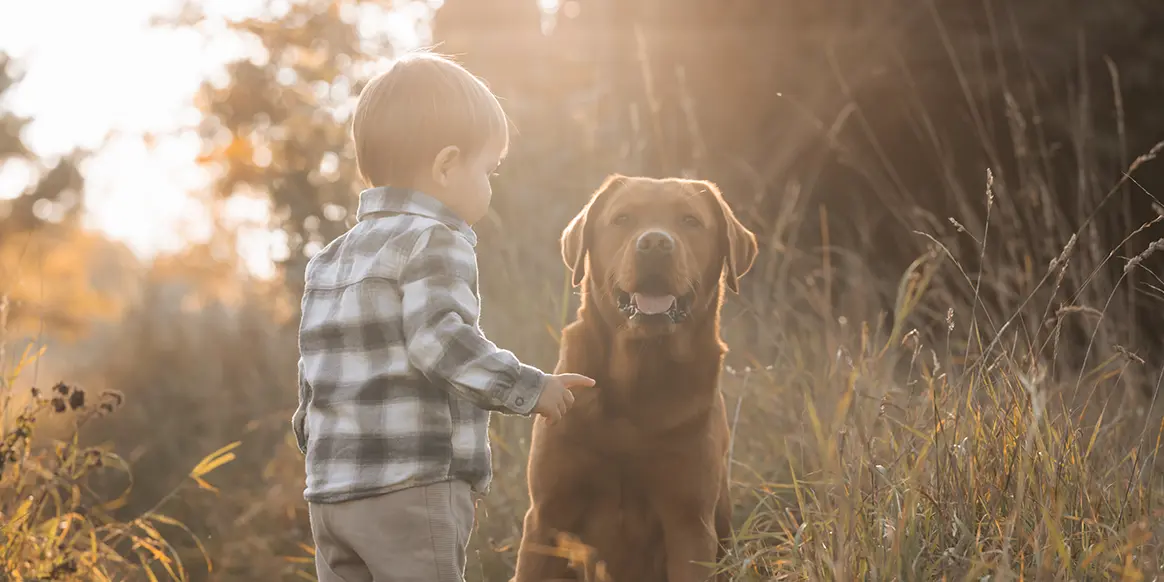
- Your pet: Dogs bring energy and genuine joy to the shoot. Make sure to arrange for someone to take care of them during breaks.
- A blanket: the most unassuming and useful prop of all. It creates a cozy space where everyone can huddle close together.
There are four topics that are part of a family photo shoot, but they go beyond the scope of this article. That’s why I’ve covered them in detail in separate posts.
Location and season. The forest, a meadow, the beach, or your own backyard: The setting shapes the photos more than any concept ever could. The season also changes the light, colors, and clothing. You can find all about it in the article “Family Photos in Nature.”
Clothing and colors. Coordinated outfits are the best way to create a harmonious look—and also the most common mistake. To find out which colors go well together and what you’re better off leaving in the closet, check out the outfit tips for family photos.
Ideas for babies and toddlers. With a baby, the rules are different: shorter time slots, more breaks, and different photo ideas. There’s a separate post on family photos with a baby.
Preparation and Schedule. What to bring, how to get the kids in the right mood, and what happens on the day of the shoot are all covered in “Preparing for Your Family Photo Shoot ” and “The Schedule for a Family Photo Shoot.”
And if you end up not having any ideas after all—that’s fine, too. Just let me know beforehand what your family is like, what your kids are into right now, and what you definitely don’t want. I’ll be happy to use that information to plan a photo shoot that’s just right for you.